“Making the Best of a Tragedy” – historical short story

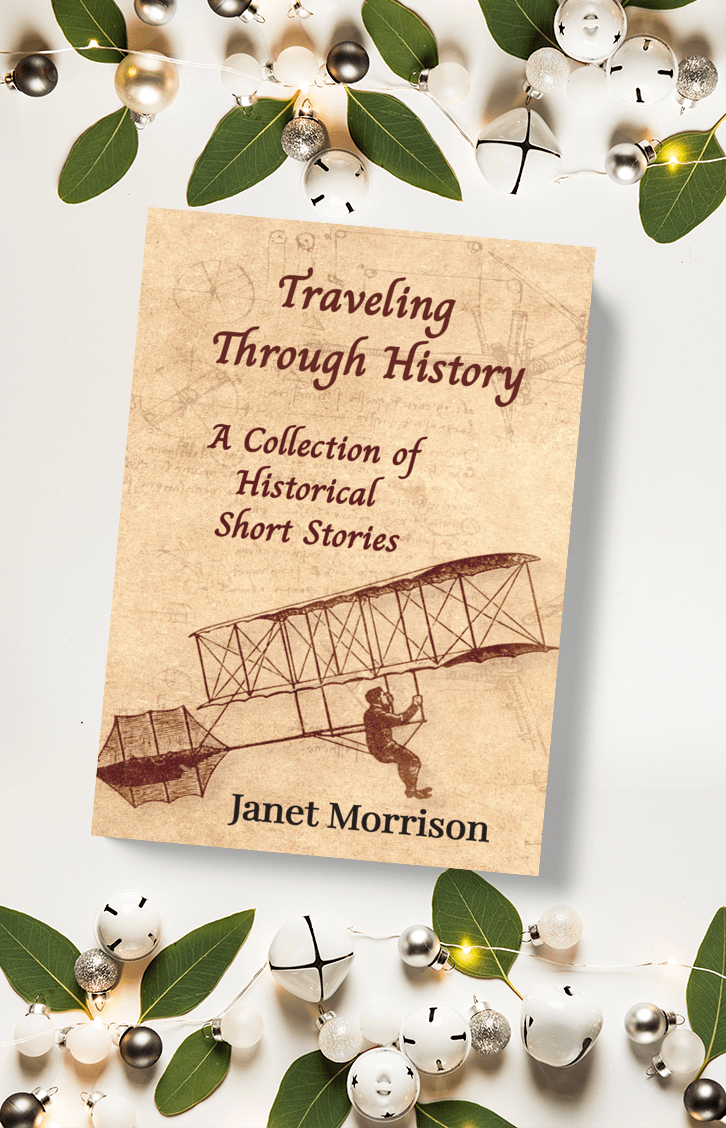
The fourth story in my new book, Traveling Through History: A Collection of Historical Short Stories, is “Making the Best of a Tragedy: Elizabeth Steele’s Story.”

I learned of Elizabeth Steele (sometimes spelled Steel) a few years ago while doing research for the writing of my historical novels. What a fascinating woman!

I must choose my words carefully, because I don’t want to ruin the short story for you.

She was a Patriot during the American Revolution. In fact, she met General Nathanael Greene and the generous gesture she made for the American cause in the dining room of her tavern in Salisbury, North Carolina, as he was on his way to the Battle of Guilford Courthouse just might have made a difference in the ultimate outcome of the Revolutionary War.

The story tells of a tragedy that befell her husband at Fort Dobbs. A lesser woman would have been crushed by the trauma, but not Elizabeth Maxwell Gillespie Steele!

I can’t wait for you to read her story and become as enthralled with her as I am! She plays an important role in my first historical novel (tentatively titled The Heirloom) and she will have a part in the subsequent novels I have drafted and planned.

Grave marker for Elizabeth Steele at Thyatira Presbyterian Church in Rowan County, NC

It was an emotional experience for me when I visited her grave at Thyatira Presbyterian Church in Rowan County, North Carolina. I have spent so much time with her in my imagination and writing that I feel as though I know her and she is my friend and mentor. She, no doubt, has influenced some of my political rants on my blog!

If a woman on the frontier in the backcountry of North Carolina could do what she did in the 1700s, why should I do less for my country in the 2020s?

In case you missed them here are the links to my blog posts about the first three stories in my book: “The Tailor’s Shears” – Historical Short Story; “You Couldn’t Help But Like Bob” — historical short story; and “To Run or Not to Run” – historical short story.

Where to purchase Traveling Through History: A Collection of Historical Short Stories

You can find my new short story collection on Amazon in e-book (https://www.amazon.com/Traveling-Through-History-Collection-Historical-ebook/dp/B0FZQBMC2Q and paperback (https://www.amazon.com/Traveling-Through-History-Collection-Historical/dp/B0FZSR6FPX.)

Traveling Through History: A Collection of Historical Short Stories, by Janet Morrison

You can find the paperback at Second Look Books in Harrisburg, NC, or ask for it at your local independent bookstore. Bookstores can order it from IngramSpark.

Janet

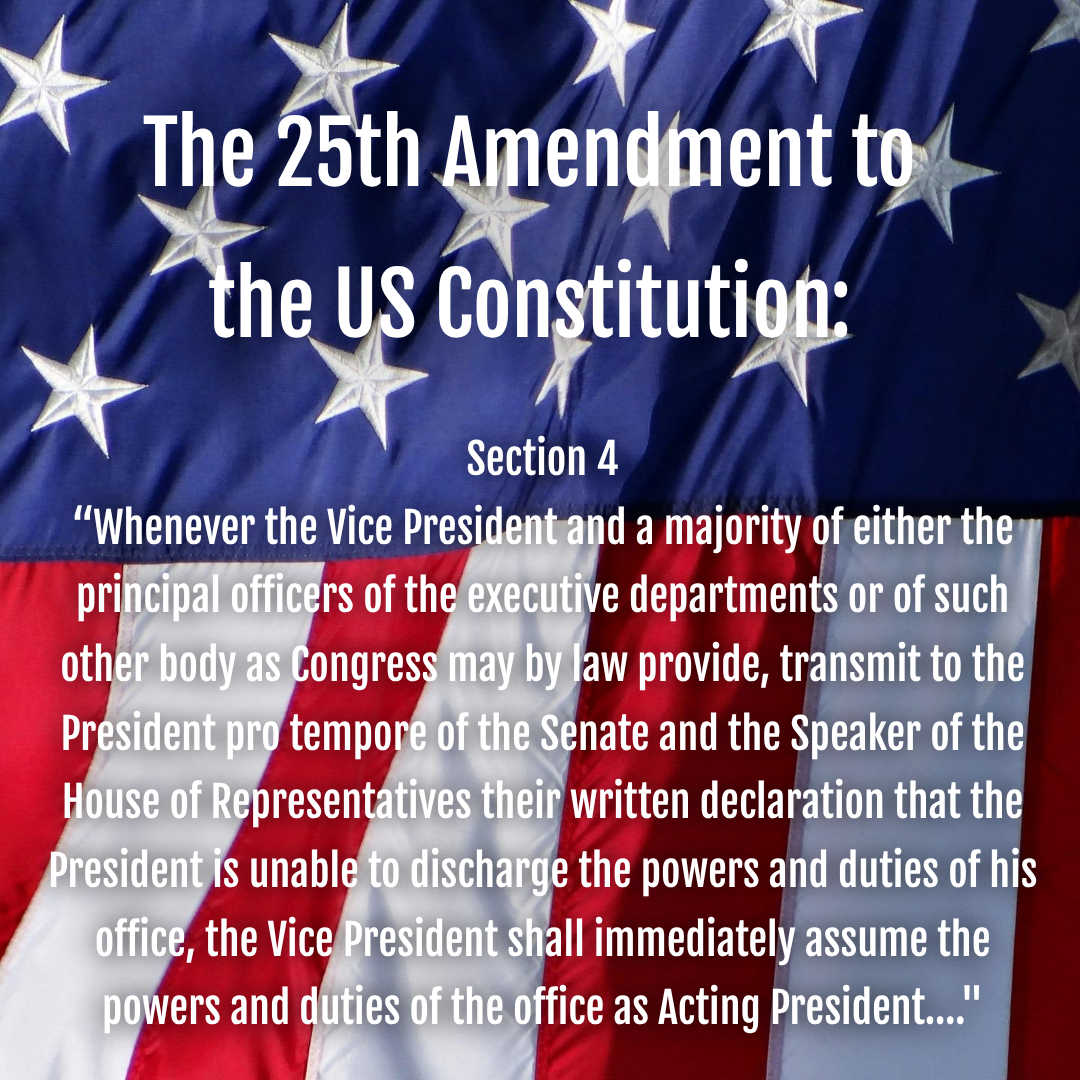
#OnThisDay: Bill of Rights ratified in 1791

Today is Bill of Rights Day in the United States. The first ten amendments to the U.S. Constitution are known as the Bill of Rights. Those amendments were ratified on December 15, 1791, when nine of the 13 states in the union at that time voted for their adoption.

The U.S. Constitution is a living, breathing document. Even when it was written, many people knew it was inadequate for the new nation because it gave the national government too much power and gave individual citizens and states too little power.

In fact, the U.S. Constitution itself was not ratified (adopted by three-fourths of the states) until there were assurances that amendments were going to follow. The process, though, was not as simple as one might imagine.

For Americans in 2025, the first ten amendments to the Constitution are taken for granted. They make sense to us. They appear to us as a neat little package we easily call the Bill of Rights; however, did you know that when the first Congress of the United States convened on March 4, 1789, they considered 145 proposed amendments?

I would have loved to have been a fly on the wall in their meetings in New York City over the next six and a half months to hear the debates! Can you imagine?

On September 25, 1789, the Congress submitted 12 of those 145 amendments to the states for consideration. Ten of the 12 were approved by the required nine states over the next 27 months and the Bill of Rights became the law of the land on December 15, 1791.

I tried in vain to find a list of those 145 proposed amendments online this weekend. It would be interesting to know what they were about and why only 12 of them were submitted to the states for consideration.

Even without knowing what the other 133 proposed amendments addresses, I can safely say that our lives have been much simpler since 1791 with a ten-amendment Bill of Rights instead of a 145-amendment Bill of Rights!

The Bill of Rights, condensed version

The First Amendment guarantees us freedom of religion, speech, and the press.

The Second Amendment guarantees us the right to bear arms.

The Third Amendment guarantees that in a time of peace, no citizen will be required to house a soldier without their consent, nor during a time of war except as prescribed by the law.

The Fourth Amendment guarantees us to be secure against unreasonable searches and seizures. (Unfortunately, I do not believe ICE and the U.S. Border Patrol are currently being held to that.)

The Fifth Amendment is more complex than the first four. It addresses the protection of our rights to life, liberty, and property. It talks about indictments, military actions, double jeopardy, not having to testify against yourself, due process of law, and the taking of private property for public use without just compensation. (The “due process of law” clause has been ignored in some cases this year by the Trump Administration. We have not heard the last of this.)

The Sixth Amendment guarantees us a speedy public trial by an impartial jury in the jurisdiction in which the alleged crime was committed when we are accused of a crime. It also addresses the right to obtain witnesses and assistance of legal counsel for our defense.

The Seventh Amendment addresses our rights in civil cases.

The Eighth Amendment protects us from excessive bail, fines, and “cruel and unusual” punishment.

The Ninth Amendment protects us from being denied our rights or disparaged by the rights that other people have. Just because a right is not listed in the U.S. Constitution, it does not mean that we do not have that right or those rights. Just because a right is not mentioned in the Constitution, the government cannot infringe upon it.

The Tenth Amendment states that powers that are not specifically delegated to the federal government by the Constitution are, therefore, rights of the states or of the people.  

Just for fun, when did the Eleventh Amendment come along?

Thinking about the Bill of Rights today, I was curious to find out how long after December 15, 1791, was the Eleventh Amendment ratified and what is it about? We never hear anything about it.

In 1793, the U.S. Supreme Court ruled in Chisholm v. Georgia that individuals from one state could sue the government of another state. The Eleventh Amendment was ratified in 1795. It protects states from being sued by individuals from another state or country. It established the principle of state sovereign immunity.

How many amendments have been proposed since 1787?

Since the U.S. Constitution was written in 1787, approximately 11,985 amendments have been introduced in Congress. Most of them never made it off the floor of the U.S. House of Representatives or the floor of the Senate. Twenty-seven amendments to the Constitution have been ratified.

Janet

P.S.    On Friday, the National Trust for Historic Preservation filed a lawsuit in the U.S. District Court for the District of Columbia to try to stop the construction of President Antionette’s 90,000-square-foot dance hall at the White House. The suit argues that President Antionette did not go through the legal review process for the project.

The courts have not been able to stop him on anything else, so it will be interesting to see where this case goes. I suppose if it goes all the way to the U.S. Supreme Court his buddies who form the majority of the court will vote for Trump to proceed with his little dance hall. Or, if they vote to stop him, he will just ignore their ruling. After all, he has already demolished the East Wing of the White House to make room for it.

 “Let them eat cake.” Or, as he proclaimed last week with the Christmas season fast approaching, a child only needs one pencil.

J.

Trump’s National Security Strategy – The Eastern Hemisphere

Yesterday, I primarily blogged (https://janetswritingblog.com/2025/12/10/trumps-national-security-strategy-the-western-hemisphere/) about the Western Hemisphere portion of the Trump Administration’s National Security Strategy which was released last Friday, although it bears a November 2025 date. It was quietly released and posted on the White House website: https://www.whitehouse.gov/wp-content/uploads/2025/12/2025-National-Security-Strategy.pdf. I encourage you to read the document and draw your own conclusions. Yours might not align with mine.

In addition to the Western Hemisphere, the document addresses Asia, Europe, the Middle East, and Africa – in that order.

Photo of a map of the Old World Eastern Hemisphere
Photo by The New York Public Library on Unsplash

Asia

As only a document coming out of the Trump White House can say, the Asia portion of the strategy begins with the words, “President Trump single-handedly reversed more than three decades of mistaken American assumptions about China: namely, that by opening our markets to China, encouraging American business to invest in China, and outsourcing our manufacturing to China, we would facilitate China’s entry into the so-called ‘rules based international order.’ This did not happen. China got rich and powerful, and used its wealth and power to its considerable advantage. American elites—over four successive administrations of both political parties—were either willing enablers of China’s strategy or in denial.”

That’s rich, coming from Trump who had so much of his Trump brand merchandise manufactured in China! And his daughter had her line of jewelry made in China! The Trump family took full advantage of the “mistakes” of precious U.S. Presidents and got richer and richer at the expense of the American factory worker.

The document goes on to state, “… the Indo-Pacific is already and will continue to be among the next century’s key economic and geopolitical battlegrounds. To thrive at home, we must successfully compete there—and we are. President Trump signed major agreements during his October 2025 travels that further deepen our powerful ties of commerce, culture, technology, and defense, and reaffirm our commitment to a free and open Indo-Pacific. America retains tremendous assets—the world’s strongest economy and military, world-beating innovation, unrivaled “soft power,” and a historic record of benefiting our allies and partners—that enable us to compete successfully. President Trump is building alliances and strengthening partnerships in the Indo Pacific that will be the bedrock of security and prosperity long into the future.”

Several hundred words later, the Asia section of the document ends with, “We will also harden and strengthen our military presence in the Western Pacific, while in our dealings with Taiwan and Australia we maintain our determined rhetoric on increased defense spending. Preventing conflict requires a vigilant posture in the Indo-Pacific, a renewed defense industrial base, greater military investment from ourselves and from allies and partners, and winning the economic and technological competition over the long term.”

It appears that Australia was thrown into that last paragraph as an afterthought.

Europe

The European section of the National Security Strategy begins by throwing Europe under the bus, as Trump likes to do. He is critical of every country, including his own. Nothing is good enough. After laying out some supposed statistics (I say supposed because, sadly, I don’t believe anything the Trump Administration says), the document says if the current trend in Europe continues, “the continent will be unrecognizable in 20 years or less. As such, it is far from obvious whether certain European countries will have economies and militaries strong enough to remain reliable allies.”

The paper goes on to address the threat Russia poses with its nuclear weapons and the need to “reestablish conditions of strategic stability across the Eurasian landmass, and to mitigate the risk of conflict between Russia and European states.

I find the following statement in the NSS interesting, considering the Trump Administration’s propensity to make it more difficult for U.S. citizens to vote and its blatant efforts to prompt states to gerrymander Congressional district lines to assure him of retaining the Republican majority in the U.S. House of Representatives.

That statement: “A large European majority wants peace, yet that desire is not translated into policy, in large measure because of those governments’ subversion of democratic processes. This is strategically important to the United States precisely because European states cannot reform themselves if they are trapped in political crisis…. Not only can we not afford to write Europe off—doing so would be self-defeating for what this strategy aims to achieve. American diplomacy should continue to stand up for genuine democracy, freedom of expression, and unapologetic celebrations of European nations’ individual character and history….  Our goal should be to help Europe correct its current trajectory. We will need a strong Europe to help us successfully compete, and to work in concert with us to prevent any adversary from dominating Europe…. We want to work with aligned countries that want to restore their former greatness.”

The document then addresses NATO and its future as “certain NATO members will become majority non-European.”

The Middle East

This section of the NSS begins by addressing energy and how the Middle East is not as important in that arena as it was for decades. It touts the fact that the U.S. is now an energy exporter. It also boasts that Trump has “revitalized” U.S. alliances in “the Gulf.” It says the threats to peace in the Middle East are not as strong as the news headlines indicate. It brags about the U.S. June 2025 Operation Midnight Hammer attack on Iran’s nuclear program.

Africa

The NSS document starts this section by criticizing past American policy in Africa as spreading liberal ideology. Instead, the Trump Administration seeks to partner with “select countries” to create trade to replace the foreign aid of the past.

This section of the document ends with, “The United States should transition from an aid-focused relationship with Africa to a trade- and investment-focused relationship, favoring partnerships with capable, reliable states committed to opening their markets to U.S. goods and services. An immediate area for U.S. investment in Africa, with prospects for a good return on investment, include the energy sector and critical mineral development. Development of U.S.-backed nuclear energy, liquid petroleum gas, and liquified natural gas technologies can generate profits for U.S. businesses and help us in the competition for critical minerals and other resources.

In other words, what’s in it for Trump? He can only see the world through the lens of business. That lens only sees how he can personally benefit financially.

I hate to have such a distrust for and poor perspective of a U.S. President. I don’t enjoy writing any of this.

Janet

Trump’s National Security Strategy – The Western Hemisphere

What we have here in the United States is obviously a Wizard of Oz situation.

The White House quietly released the November 2025 National Security Strategy (NSS) and posted it on the White House website. Since it is the announcement of the official U.S. foreign policy, there is usually a bit of fanfare with its release, but not this year.

Most Americans will never hear about it, much less read it.

It begins with a letter signed by Trump but obviously written by someone else. Probably Stephen Miller. Why do I say that? Simple. It is written in complete sentences.

The letter

That letter is enlightening because it does list the “eight raging conflicts” Trump claims to have put an end to in “just eight months” this year. In case you’re having trouble keeping up with the wars Trump has ended, here’s the list as found in this letter: Cambodia & Thailand, Kosovo & Serbia, the Democratic Republic of Congo & Rwanda, Pakistan & India, Israel & Iran, Egypt & Ethiopia, Armenia & Azerbaijan, and Israel & Gaza, although Israel is not named in the letter. (He wouldn’t want to show the government of Israel in a bad light, would he?)

The letter is full of bluster and boasts of all the amazing things Trump has done and all the “weakness, extremism, and deadly failures” of the Biden Administration. As only Trump can boast, the letter states, “Over the past nine months, we have brought our nation — and the world – back from the brink of catastrophe and disaster.”

The NSS document

The NSS document itself contains 29 pages of details of what the United States wants and what the United States wants from the world.

Some of the introductory remarks would be laughable if they weren’t so sad. For instance, “We want to maintain the United States’ unrivaled ‘soft power’ through which we exercise positive influence throughout the world that furthers our interests” rings hollow considering the Trump Administration obliterated USAID.

The sudden obliteration of USAID not only resulted in the starvation of hundreds of thousands of children but also their preventable deaths by the withholding of medical treatments – not to mention how the cessation of the food aid programs hurt the American farmer terribly.

The paragraph that really made me gag, though, was this one:

“Finally, we want the restoration and reinvigoration of American spiritual and cultural health, without which long-term security is impossible. We want an America that cherishes its past glories and its heroes, and that looks forward to a new golden age. We want a people who are proud, happy, and optimistic that they will leave their country to the next generation better than they found it. We want a gainfully employed citizenry – with no one sitting on the sidelines – who take satisfaction from knowing that their work is essential to the prosperity of our nation and to the well-being of individuals and families. This cannot be accomplished without growing numbers of strong, traditional families that raise healthy children.” (Notice the subtle reference to “traditional families.”)

Dear Leader Kim Jong Un of North Korea couldn’t have written that paragraph better! Delete the words “American spiritual” and I would swear I was reading a translation of a statement by Kim or Xi.

A paragraph that sent chills down my spine, though, was this one: “We want to ensure that the Western Hemisphere remains reasonably stable and well-governed enough to prevent and discourage mass migration to the United States; …we want …; we want … ; and we want to ensure our continued access to key strategic locations. In other words, we will assert and enforce a “Trump Corollary” to the Monroe Doctrine;….”

It was “Trump Corollary” that got to me. Why does his name have to go on every cotton-picking thing?

The document goes on to delineate U.S. policy by region: The Western Hemisphere, Asia, Europe, the Middle East, and Africa.

Introductory remarks that preface the regional details include, “The United States is by every measure the most generous nation in history – yet we cannot afford to be equally attentive to every region and every problem in the world.”

The Western Hemisphere

Photo of an Old World drawing of the western hemisphere
Photo by The New York Public Library on Unsplash

The so-called “Trump Corollary” to the Monroe Doctrine involves making new partners and reconsidering our military presence in the Western Hemisphere. This seems to involve beefing up our Coast Guard and Navy presence “to control se lanes, to thwart illegal and other unwanted migration, to reduce human and drug trafficking, and to control key transit routes in a crisis.” It also includes “targeted deployments to secure the border and defeat cartels, including where necessary the use of lethal force to replace the failed law enforcement-only strategy of the last several decades.”

Also, “…as we prioritize commercial diplomacy, we will work to strengthen our security partnerships – from weapons sales to intelligence sharing to joint exercises.” This is in response to non-Western Hemisphere nations’ incursions of influence in recent years.

But the National Security Strategy goes on from there and seems to concentrate on the economy and what’s in it for United States companies. As a student of political science, it reads to me as a complete overhaul of the U.S. State Department and the responsibilities of our diplomats and State Department employees out in the field. This makes me cringe.

The U.S. “will reform our own system to expedite approvals and licensing – again, to make ourselves the partner of first choice. The choice all countries should face is whether they want to live in an American-led world of sovereign countries and free economies or in a parallel one in which they are influenced by countries on the other side of the world….

“All our embassies must be aware of major business opportunities in their country, especially major government contracts. Every U.S. Government official that interacts with these countries should understand that part of their job is to help American companies compete and succeed.

“The U.S. Government will identify strategic acquisition and investment opportunities for American companies in the region and present these opportunities for assessment by every U.S. Government financing program, including but not limited to those within the Departments of State, War, and Energy; the Small Business Administration; the International Development Finance Corporation; the Export-Import Bank; and the Millennium Challenge Corporation.

“We should also partner with regional governments and businesses to build scalable and resilient energy infrastructure, invest in critical mineral access, and harden existing and future cyber communications networks that take full advantage of American encryption and security potential.

“The aforementioned U.S. Government entities should be used to finance some of the costs of purchasing U.S. goods abroad. The United States must also resist and reverse measures such as targeted taxation, unfair regulation, and expropriation that disadvantage U.S. businesses. The terms of our agreements, especially with those countries that depend on us most and therefore over which we have the most leverage, must be sole-source contracts for our companies. At the same time, we should make every effort to push out foreign companies that build infrastructure in the region.”

The part about U.S. State Department – or any other U.S. Government employee – who interacts with countries in the Western Hemisphere to understand that it is “part of their job to help American companies compete and succeed” is a 180-degree change in the purpose U.S. Government employees. It is not part of the job of a State Department employee to promote American companies! At least, it wasn’t part of their job until last Friday. That is absolutely not the job of the U.S. diplomatic corps!

I suppose this being put in writing by the Trump Administration should come as no surprise. After all, the U.S. State Department no longer makes “peace agreements;” it makes “deals” because Trump has an overwhelming lack of understanding or appreciation for the traditional functions of government in a democracy.

Western Hemisphere Command

It was not a coincidence that we learned on Thursday or Friday that two U.S. military command centers will be moving to Fort Bragg here in North Carolina over the next year as a new “Western Hemisphere Command” has been announced.

Possible blog post tomorrow

If I can recover from reading the Western Hemisphere portion of the National Security Strategy, I will blog tomorrow about how it addresses Asia, Europe, the Middle East, and Africa.

I invite and encourage you to read the complete NSS document for yourself and not to take my word for it at: https://www.whitehouse.gov/wp-content/uploads/2025/12/2025-National-Security-Strategy.pdf.

Janet

Another Trump Nail in the Coffin of the CDC?

The advisory committee on vaccinations to the Centers for Disease Control and Prevention (CDC) were hand-picked by notorious vaccine-denier Robert F. Kennedy, Jr. He just happens to be Trump’s pick for U.S. Secretary of Health and Human Services. He received the blessings of and confirmation by the U.S. Senate to serve in that capacity.

Photo of gloved hands holding a hypodermic needle
Photo by Mufid Majnun on Unsplash

There are things I would like to say to and about the Senators who voted to approve Kennedy for that Cabinet position, but I will temper my remarks here. To give a person who for decades has promoted conspiracy theories about vaccines to Secretary of Health and Human Services was a travesty.

When the U.S. Senate approved the likes of Robert F. Kennedy, Jr. as Secretary of Health and Human Services, Pete Hegseth as Secretary of Defense, and Kristi Noem as Secretary of Homeland Security… we get what they voted for: dangerous incompetence.

When people held their noses and voted for the likes of Donald J. Trump for U.S. President, we got what they voted for: dangerous incompetence and a colossal hatred for anyone who isn’t a rich, white male.

What we have now is a growing avalanche of physicians and other medical professions telling us not to trust anything that comes out of the CDC, the Federal Drug Administration, or Health and Human Services. Let that sink in!

On December 5, Trump said he supported the recommendations of the CDC vaccine advisory committee (many of whom are known vaccine deniers) in their recommendation that we abandon the 1991 CDC recommendation that all newborn babies in the U.S. receive the hepatitis B vaccine.

Apparently, Trump knows just as much about immunology as the quacks and Republicans on the advisory committee. Having a medical or any level of a health degree was not a prerequisite to be on the committee. Let’s just let any person off the street who supports Trump form new vaccinations policies and schedules for all Americans. What could possibly go wrong?

The hepatitis B vaccine decision flies in the face of medical data. In 1990, approximately 20,000 infants in the U.S. got hepatitis B. In 2020, twenty infants in the U.S. got hepatitis B. The vaccine not only prevents the liver damage caused by hepatitis B. It also prevents the liver cancer that can result from that liver damage.

It remains to be seen how this ill-advised new CDC policy will play out over the coming years. Will pharmaceutical companies limit production of the hepatitis B vaccine? Will parents who want their newborns to be protected from this highly-contagious disease be able to get the vaccine for their children? No one knows the answers to those questions.

A memo that Trump signed on Friday praised the new CDC recommendation and went on to endorse the new policy that instead of leading the world in health science, the CDC will now follow the lead of “peer, developed countries.”

I guess it’s fortunate that Trump’s children and grandchildren were all vaccinated as newborns before this 34-year-old mandate got scrapped last week. His future grandchildren and great-grandchildren might not be so fortunate.

When Trump promised to “drain the swamp,” we didn’t know he thought the CDC was part of the swamp.

We are left to wonder if the CDC will survive three more years of attacks by Trump and Kennedy.

Meanwhile, in Washington, DC last week…

In a move that is so blatantly racist and narcissistic, the Trump Administration removed Martin Luther King Day and Juneteenth as days that all our national parks could be visited for free and replaced them with… you are not going to believe this… Trump’s Birthday!

This is not a joke. This is the truth. You can’t make this stuff up!

Janet

“To Run or Not to Run” – historical short story

The fictional character I’m introducing to you today is George. He is a slave in South Carolina in the mid-1700s in the third story in Traveling Through History: A Collection of Historical Short Stories, “To Run of Not to Run.”

When you meet George, he is a young boy. He and his father, who was born in Senegal, have just been sold and are being taken from Camden to the Waxhaws.

Photo by Asso Myron on Unsplash

Here’s an excerpt from when George and his father are in the back of a wagon being taken to their new living situation in the Waxhaws:

“George sensed his father was tiring of his questions, so he shut his eyes tight and tried to turn off his mind. But the harder he tried not to think, the more questions flooded his head. The ones that kept crowding out all the others were ones he knew not to ask because he was afraid his papa did not know the answers. When will we see Mama again? When are we going to be free?

You will follow George as he has a lot to learn and grows up fast. His new master’s son is about his age. Therein forms a dynamic that will ultimately be further developed in the historical novels I am planning and writing.

Remember George. He is a character who grew out of my imagination and has never let me go. I don’t think he will let you forget him either.

Getting into the skin, brain, and soul of a young boy with black skin who is living as a slave in America in the mid-1700s allowed me to stretch my imagination in ways that my other fictional characters did not.

In case you missed my November 24 and December 1 blog posts about the first two stories in Traveling Through History: A Collection of Historical Short Stories, here are the links: “The Tailor’s Shears” – Historical Short Story and “You Couldn’t Help But Like Bob” — historical short story.

Where to purchase Traveling Through History: A Collection of Historical Short Stories

You can find my new short story collection on Amazon in e-book and paperback. You can find the paperback at Second Look Books in Harrisburg, NC, or ask for it at your local independent bookstore.

Hurricane Helene Recovery Update

I haven’t offered a Hurricane Helene recovery update since my November 3 blog post.

As of Friday, December 5, 25 roads in North Carolina were still closed due to Hurricane Helene’s wind, flooding, and landslides on September 26, 2024. That is a decrease of six roads since a month ago. There are three U.S. highways, two State highways, and 20 state roads closed more than 14 months after the hurricane.

In Tennessee… as of Tuesday, December 2, U.S. 321in Elk Mills, in the Watauga Lake area, is officially reopened since being heavily damaged by the hurricane.

Sections of the Blue Ridge Parkway in North Carolina will remain closed until at least next fall, and I-40 at the Tennessee line will continue to be just two lanes at 35 miles-per-hour for a couple more years while five miles of the highway are being rebuilt in the Pigeon River Gorge.

The following success story was cut and pasted from a U.S. Forest Service – National Forests in North Carolina Facebook post on December 3, 2025:  “Two decades ago, after Hurricane Frances and Ivan, our ecosystems team saw how erosion could unravel an entire ecosystem. Brady Dodd, hydrologist for the National Forests in North Carolina, developed and executed a plan to reshape eroded riverbanks, plant riparian flood resistant species and add erosion prevention structures. After Helene arrived, the banks held, and the water ran clear due to the work that had been done years prior. This story serves as a model to our forests as we continue to build resilience into each of our Helene recovery projects.”

We’ve gone from fall leaf season to snow ski season in western North Carolina since my last update. Be aware that you might run into a detour, and you can’t drive the full length of the Blue Ridge Parkway.

If you visit, please drop by Blue Ridge Books in Waynesville and Highland Books in Brevard. Tell them I sent you. They sell my books!

Janet

Report about “Alligator Alcatraz”

The United States of America used to be a nation of laws, or am I naïve?

I did not plan to blog today, but something came to my attention that I can’t let slide.

Amnesty International has issued a 48-page report. I thought it was going to be a report on the organization’s findings throughout the world but, no, it is a report on detention facilities in the State of Florida. 48 well-documented pages.

This is a photo of a hand-held sign that says, "Human Rights For Future - Amnesty International"
Photo by Christian Lue on Unsplash

The name of the report is “Torture and enforced disappearances in the Sunshine State: Human rights violations at “Alligator Alcatraz” and Krome in Florida AMR 51/0511/2025” and can be found at https://www.amnesty.nl/content/uploads/2025/12/AMR_51_0511_2025-Torture-and-enforced-disappearances-in-the-Sunshine-State-vf.pdf?….

Photo of an alligator showing his teeth
Photo by Gabriel Soto on Unsplash

The U.S. Detention Center dubbed “Alligator Alcatraz” due to its location in the Everglades and the manner in which it was publicized by the Trump Administration and the early reports that came out of there, has completely fallen off the radars of news organizations. With Border Patrol and ICE activities in Los Angeles, Chicago, Charlotte, New Orleans, and Minneapolis-St. Paul dominating the news cycles along with the Epstein Files and whether the United States is going to bomb Venezuela and force a regime change in that country… “Alligator Alcatraz” cannot compete for attention.

Thank goodness it hasn’t fallen off Amnesty International’s radar. The organization’s report this week paints a horrible picture of conditions at “Alligator Alcatraz.”

I know there are Americans who glibly turn a blind eye to any reports that put the Trump Administration in a bad light. They seem to think it’s acceptable for the U.S. to bomb boats in international waters and launch multiple attacks to kill any survivors. They also tend to agree with Trump that anyone who ends up in a detention center is sub-human and deserves horrible treatment. Many of these people also claim to be Christians. This baffles me, but that isn’t the purpose of today’s blog post.

(And why is Trump’s good buddy, Steve Witkoff, giving Putin advice on how to negotiate with Trump? But I digress.)

PHoto of fingers gripping a wire fence
Photo by Mitchel Lensink on Unsplash

I cannot easily summarize the report in this blog post, but here are a few highlights:

Lights are on around-the-clock;

Although the United Nations considers solitary confinement lasting more than 15 days to be torture, but at “Alligator Alcatraz,” some detainees have been in solitary confinement for more than 100 consecutive days;

Inadequate/ill-maintained plumbing results in toilets overflowing and flooding cells;

Detainees are allowed one five-minute shower per week;

Mold, insects, and rodents abound;

Food is often spoiled or maggot-infested;

Medical and mental health care are often withheld;

At least four detainees have died due to medical neglect;

Detainees are effectively dropped from the immigration court system because ICE and GEO Group refuse to report them to other government authorities;

Guards have used pepper spray in closed cells and then denied decontamination;

Sexual assault is occurring;

Detainees are punished if they complain about conditions;

Force-feeding has been used without proper medical oversight

There are 1,400 detainees being held there now at a facility built for 700;

ICE renewed GEO Group’s contract to operate the facility inspite of all the evidence that the company is not maintaining current standards of incarceration in the United States; and

The Department of Human Services Office for Civil Rights and Civil Liberties has not inspected “Alligator Alcatraz” since July 2025.

My thoughts

Call me a “bleeding heart liberal” if you wish, but I would ask you if this is now the acceptable penal standard in the United States of America? Do we aspire to be a “Third World” country?

Is anything on the above list making “America Great Again” or did I misunderstand Trump’s campaign promise?

If you are all right with our country treating detainees horribly, then you and I have fundamental differences in how we interpret the teachings of Jesus Christ as well as the letter and spirit of the United States Constitution.

The sobering lines of Martin Niemoller’s much-quoted “First they came” statement/poem come to mind.

A meme that reads, "First they came for the immigrants, but I wasn't an immigrant."

They haven’t come for me yet, but I feel compelled to speak up for the least of these among us and alleged atrocities committed by the United States Government or its private contractors such as GEO Group.

I love my country. That is why it hurts so much when we fall short of our potential and our history.

Janet

Great publicity I got today in Spain!

Francisco Bravo Cabrera graciously featured me and my new book, Traveling Through History: A Collection of Historical Short Stories on his e-zine in Spain (LatinosUSA (English Edition/Masticadores) this morning at 8:00 a.m. Madrid Time!

Francisco Bravo Cabrera is a bit of a Renaissance man. He is an artist, a poet, a writer, and a musician. He is based in Valencia, Spain, but has also lived in Miami, Florida. His blog, JaZzArt en Valencia, can be found at https://paintinginvalencia.com/, and his work can also be found on https://www.fineartamerica.com.

I cut and pasted Francisco’s magazine article about my new book below, but two of the photographs did not copy. Here’s the link, if you want to see the original for yourself: https://latinosenglishedition.wordpress.com/?p=8436.

New Historical Fiction by Janet Morrison (Editor Francisco Bravo Cabrera)

Published by valenciartist on 3 de diciembre de 2025

(Photo: Janet Morrison/provided by Janet Morrison)

As a big fan of history and novels, there is no genre that fascinates me more than «historical fiction,» therefore I would like to feature today a historical fiction writer from North Carolina (US), Janet Morrison, who has just released a new book, Traveling Through History: A Collection of Historical Short Stories. I am sure it can easily be found in Amazon or in your neighbourhood book store.

I have asked Janet to bring us a synopsis of the 13 stories included in the book. And although she thought it a bit tricky, I think she has covered them in a concise way.

Traveling Through History: A Collection of Historical Short Stories, by Janet Morrison, will transport you from 17th century Scotland to 20th century America! The more than one dozen short stories are set in Scotland, Pennsylvania, Maryland, Virginia, North Carolina, and South Carolina.

Each story includes author’s notes, so you will learn what inspired the story, how the story is based in history but is a work of fiction.

There are stories set in Colonial America and the American Revolutionary War Era. One story is the fictitious letter an American Civil War soldier wrote to his parents. Another story follows a slave who contemplates escaping. A couple of the stories are set in the southern Appalachian Mountains – one during a blizzard in the 1870s and involves a dog and a bear during The Great Depression. There is one ghost story. In another story, a girl in foster care discovers the dignity a suitcase can bring. The final story in the book is told by an old farmhouse that remembers the family it sheltered in the 1800s.

+++

Janet Morrison’s educational background is in political science and history. She has worked as a local government administrator, a travel agent, and a newspaper columnist. She enjoys writing historical fiction and local history at her home in North Carolina. Her vintage postcard book, The Blue Ridge Mountains of North Carolina was published in 2015. Since then, she has published two local history books, a devotional book, and a cookbook. Janet uses her blog, https://www.janetswritingblog. com, as a platform to write about the books she reads, events in history, and politics. The most rewarding thing about her blog is that it has made it possible for her to make friends around the world. When she has spare time, she loves researching her genealogy and learning to play the dulcimer. Be sure to visit https://www. janetmorrisonbooks.com to learn more about her books and to subscribe to her newsletter.

+++++

I would like to thank Janet so much for her participation in today’s episode and to remind her that she is welcome here any time. I am sure that we will all enjoy reading this historical fiction book as well as the other books she has written.

AND

If you are a writer, a poet or an artist (in any of the arts) and would like to appear in our magazine LatinosUSA (English Edition), please contact me, Francisco Bravo Cabrera, editor: ArribaPamplona@gmail.com

(Editor: Francisco Bravo Cabrera)

CHEERS


Muchas gracias, Francisco, for giving me and my book such great publicity today!

Janet

“You Couldn’t Help But Like Bob” — historical short story

Today I am introducing you to the main character in “You Couldn’t Help But Like Bob,” the second story in my new book, Traveling Through History: A Collection of Historical Short Stories.

Photo of the front cover of Traveling Through History: A Collection of Historical Short Stories, by Janet Morrison

Genealogy has been a hobby of mine since I was a young adult. Robert Dooling is the most colorful of my ancestors that I have found so far. He immigrated from Ireland to America in the early 1700s and settled in Virginia.

Some people would be embarrassed at discovering one of their great-great-great-great-great-grandfathers was on the wrong side of the law in Colonial Virginia, but that just made Robert Dooling that much more interesting to me. To my way of thinking, that’s a lot better than just knowing an ancestor’s birth and death dates.

I devoured the colonial court records, eagerly searching for every tidbit or reference to Robert. As far as I know, he never did anything too serious. Perhaps his worst offence was “abusing” a Justice of the Peace. (I’m not clear on what constituted “abusing” a Justice of the Peace in Tappahannock, Virginia in the early 18th century.

I had fun creating a fictional story about this man I only know on paper, but his blood runs through my veins and I’m grateful to know more about him than just his name.

Here are the opening lines in the story:

“You couldn’t help but like Bob. Unless he owed you money. Unless you were a Justice of the Peace in Essex County, Virginia in the early 1700s.

“Even so, you just couldn’t help but like Bob.

“To say Bob was irritating would be an understatement, but you couldn’t stay made at him for long. Unless he owned you money or tobacco. Unless you were a Justice of the Peace, tired of seeing him dragged into your court room.”

I hope you will enjoy reading the story as much as I enjoyed writing it.

After you read “You Couldn’t Help But Like Bob” in Traveling Through History: A Collection of Historical Short Stories, you’ll know more about him. I hope you will like him, too!

I case you missed my November 24, 2025, blog post about the first story in my new book, here’s the link: “The Tailor’s Shears” – Historical Short Story.

Where you can find my new book

Traveling Through History: A Collection of Historical Short Stories is available on Amazon, or ask for it at your favorite independent bookstore.

For my readers in North Carolina, the book is now available at Second Look Books in Harrisburg.

Thank you for supporting my writing! If you enjoy my book, a rating or review on Amazon or Goodreads would be greatly appreciated.

Janet

When the BBC bends a knee to Donald Trump

When the British Broadcasting Corporation (BBC) bends a knee to Donald Trump, we should all sit up and take notice.

Photo of a cell phone displaying the letters BBC.
Photo by appshunter.io on Unsplash

It came to my attention this afternoon that BBC Radio 4 censored a sentence out of a Reith Lectures presentation by Rutger Bregman. The BBC invited Mr. Bregman to give a series of lectures in the highly-touted Reith Lectures. The Reith Lectures have a 77-year history and have been known for being champions of free expression.

According to https://www.bbc.co.uk/programmes/articles/v78MKsCWHxw0l0PwMn4R0R/bbc-reith-lectures-2025-moral-revolution, “The Reith Lectures were inaugurated in 1948 by the BBC to mark the historic contribution made to public service broadcasting by Sir John (later Lord) Reith, the corporation’s first director-general.

“John Reith maintained that broadcasting should be a public service which enriches the intellectual and cultural life of the nation. It is in this spirit that the BBC each year invites a leading figure to deliver a series of lectures on radio. The aim is to advance public understanding and debate about significant issues of contemporary interest.”

Writer and historian Rutger Bregman was invited to deliver a series of four lectures for the 2025 Reith Lectures in London, Liverpool, Edinburgh, and the United States. Under the umbrella theme of Moral Revolution, his four lectures were “A Time of Monsters,” “How To Start a Moral Revolution,” “A Conspiracy of Decency,” and “Fighting for Humanity in the Age of the Machine.”

On November 25, 2025, Mr. Bregman (@rutgerbregman) posted on Instagram his shock that BBC Radio 4 removed a sentence from the broadcast of a lecture he delivered a month ago.

I quote from @rutgerbregman on Instagram

Mr. Bregman wrote on @rutgerbregman on Instagram:  “The BBC has decided to censor the opening lecture of a series they invited me to deliver. They removed the sentence in which I describe Donald Trump as ‘the most openly corrupt president in American history.’

“This line was taken out of a lecture they commissioned, reviewed through the full editorial process, and recorded four weeks ago in front of 500 people in the BBC Radio Theatre.

“I was told the decision came from the highest levels within the BBC.

“This has happened against my wishes, and I’m deeply troubled by it. Not because people can’t disagree with my words, but because self-censorship driven by fear (Trump is threatening to sue the BBC) should concern all of us.

“This isn’t about left or right. It’s about the health of our democratic institutions. For decades the Reith Lectures have been one of the BBC’s most important platforms for open debate and free expression. That’s why this really matters.

“In this video, I explain what happened, why it’s important, and why we should remain calm but clear-eyed about the pressures facing our public institutions.

“I share this with respect for the many excellent journalists at the BBC. And with the hope that transparency helps strengthen, not weaken, our democratic culture.”

In Mr. Bregman’s Instagram video clip

In Mr. Bregman’s video on Instagram, he explains that the irony is that the title of his lecture was “A Time of Monsters.” The lecture was about the cowardice of today’s elites and elitist institutions – “bending the knee to authoritarianism.”

In the video on Instagram, Bregman said, “They deleted the sentence in which I said, ‘Donald Trump is the most openly corrupt president in American history.’”

He said, “It was a defensible and plausible statement. It’s well known that Donald Trump and his family are personally profiting from the presidency to a degree we haven’t seen before. According to a major investigation in The New Yorker published last August, the total gain, the personal gains, already exceed roughly $3.5 billion from real estate deals to meme coins.”

Mr. Bregman went on to say that this isn’t about him – “It’s about something much bigger. When institutions start censoring themselves, because they’re scared of those in power, that is the moment we all need to pay attention. Democracies don’t collapse overnight. They gradually erode in acts of fear. Let’s not be afraid to name what’s happening, and let’s not be afraid to tell the truth.”

In closing

I couldn’t have said it better myself, so I’ll just leave it for you to draw your own conclusions about the state of the world.

I wish my fellow Americans a Happy Thanksgiving Day tomorrow.

Janet